Thursday, September 27, 2012


Thursday, October 13, 2011
OH MY FELLOW HUMANS..!!! WHAT CAN I DO FOR YOU..? READ THIS.!!! YOU REALISE THAT.!!!


OH! MY MOTHER! HOW CAN I THANK YOU FOR YOUR MILK,FOOD,CLOTHS,PROTECTION &LOVE IN NEED!
OH! MY FATHER! HOW CAN I THANK YOU FOR PROVIDING ME EDUCATION,GUIDANCE,ADVICE AS YOUNG!
OH MY SISTERS &BROTHER! HOW CAN I THANK YOU FOR YOUR AFFECTION,TRUE CRITISM &HAPPINESS!
OH MY WIFE! HOW CAN I THANK YOU FOR YOUR AFFECTION,CARE,PROTECTION,TOLERANCE&TASTY FOOD
OH MY CHILDREN! HOW CAN I THANK YOU FOR YOUR LAUGHTER,PROGRESS,AFFECTION & COURTECY!
OH MY UNCLES & AUNTS! HOW CAN I THANK YOU FOR YOUR ADVICE,LAUGHTER,FRIENDLINESS&SMILES!
OH MY FRIENDS &RELATIVES! HOW CAN I THANK YOU FOR YOUR JOKES,LAUGHTER,HOSPTALITY,SMILE!
OH MY POLITICAL,RELIGIOUS,SOCIAL,SPRITUAL,MENTORS!HOW CAN I THANK YOU FOR YOUR COURAGE!
OH MY VILLAGE! HOW CAN I THANK YOU FOR YOUR LOVELY NATURE,GREEN VIEWS & LOVELY TEMPLES!
OH MY JAFFNA! HOW CAN I THANK YOU FOR YOUR GREAT-HISTORY,EDUCATION,CULTURE&HOSPITALITY!
OH MY LANKA!HOW CAN I THANK YOU FOR YOUR NATURAL-BEAUTY,SEA,NICE FOOD & WARM CLIMATE!
OH MY NORWAY! HOW CAN I THANK YOU FOR GIVING ME&MY FAMILY PROTECTION,SAFETY,LIFE& CARE!
OH MY WORLD!HOW CAN I THANK YOU FOR YOUR REGULAR DAY&NIGHT;SUMMER&WINTER CIRCLE SAFELY!
OH MY SUN!HOW CAN I THANK YOU FOR LIGHT/HEAT FOR ALL!NOT COME CLOSER OR GO FAR AWAY!
OH MY UNIVERSE!HOW CAN I THANK YOU FOR PROVIDING HARMONY!NOT DESTROYING LOVELY WORLD!
OH MY GOD!HOW CAN I THANK YOU FOR THIS LOVELY WORLD/UNIVERSE&MY HEART WORKING SO FAR!
SHAN NALLIAH...DRAMMEN, NORWAY 13-10-2011
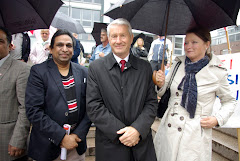
MEETING WITH HON.KRISTIN HALVORSEN, MINISTER OF EDUCATION/NORWAY WITH NEW IDEAS..!!!

DURING THE ELECTION CAMPAIGN AT FJELL SKOLE,DRAMMEN, I MET HON.MINISTER OF EDUCATION: KRISTIN HALVORSEN & SPOKE AT THE PUBLIC MEETING WITH 3 NEW IDEAS OF URGENT NEED:LOCALLY: 1 YEAR JOB TRAINING TO YOUTHS+IMMIGRANTS;NATIONALLY:MONITORING CITIZEN COMMITTEES IN EACH STREET REGARDING NAZI/EXTREME GROUPS/ENVT PROTECTION;INTERNATIONALLY:GON ACTIVE VOICE & INVOLVEMENT IN HR,JUSTICE,FREEDOM,POLITICAL SOLUTIONS IN ASIA,AFRICA &LA.I EXPLAINED THE SITUATION IN SRILANKA/TAMIL SUFFERINGS AS WELL AS NEED OF NORWAY'S ACTIVE ENGAGEMENT EVEN DURING POST-WAR PERIOD TOO! ......NSP
Friday, April 8, 2011
HRW: Jordan should immediately allow 24 Sri Lankan former domestic workers, many of whom were allegedly abused by their employers, to return home.!!!
Abused SL domestic workers stranded Friday, 08 April 2011 08:03
The Human Rights Watch (HRW) said that Jordan should immediately allow 24 Sri Lankan former domestic workers, many of whom were allegedly abused by their employers, to return home.
The workers have been stranded in Amman since January 2011, unable to pay government-imposed fines and threatened with eviction.
The migrant domestic workers were not responsible for falling out of documented residency status, had no means to rectify their situation, and are too poor to pay the fines.
“Jordan is in effect punishing these workers for escaping abusive households by piling on daily fines that prevent them from returning to their families,” said Christoph Wilcke, senior Middle East researcher at Human Rights Watch. “Meanwhile, the employers, who abused the women and, as the law requires, should pay the fines, go unpunished.”
On January 24, 37 Sri Lankan migrant domestic workers who had sought shelter at the Sri Lankan embassy left in protest at being confined there and at what they said was embassy inaction in facilitating their return home. The workers had been in Jordan for between 2 and 11 years. They had spent between a few months and more than a year-and-a-half in the embassy shelter waiting to go home, after leaving the households where they were employed. Some have since been deported or returned home after charitable payments of their fines, but 24 remain in Jordan.
The reasons the workers had fled their workplaces included non-payment of salaries, refusal by the employer or recruitment agency to buy them a required ticket to return home, beatings, or overwork. Human Rights Watch interviewed some of the workers in January and has received detailed case information from Tamkeen, a Jordanian nongovernmental organization that helps migrant domestic workers and serves as their legal representative.
Asiya Umma Noordeen, for example, told Tamkeen that she had worked for 11 years without pay before fleeing to the embassy on September 14, 2010. She cannot return to Sri Lanka because her employers never applied on her behalf for the residency and work permits required by law, so she has incurred thousands of Jordanian dinars in fines, the HRW added.
'dailymirror.lk'
The Human Rights Watch (HRW) said that Jordan should immediately allow 24 Sri Lankan former domestic workers, many of whom were allegedly abused by their employers, to return home.
The workers have been stranded in Amman since January 2011, unable to pay government-imposed fines and threatened with eviction.
The migrant domestic workers were not responsible for falling out of documented residency status, had no means to rectify their situation, and are too poor to pay the fines.
“Jordan is in effect punishing these workers for escaping abusive households by piling on daily fines that prevent them from returning to their families,” said Christoph Wilcke, senior Middle East researcher at Human Rights Watch. “Meanwhile, the employers, who abused the women and, as the law requires, should pay the fines, go unpunished.”
On January 24, 37 Sri Lankan migrant domestic workers who had sought shelter at the Sri Lankan embassy left in protest at being confined there and at what they said was embassy inaction in facilitating their return home. The workers had been in Jordan for between 2 and 11 years. They had spent between a few months and more than a year-and-a-half in the embassy shelter waiting to go home, after leaving the households where they were employed. Some have since been deported or returned home after charitable payments of their fines, but 24 remain in Jordan.
The reasons the workers had fled their workplaces included non-payment of salaries, refusal by the employer or recruitment agency to buy them a required ticket to return home, beatings, or overwork. Human Rights Watch interviewed some of the workers in January and has received detailed case information from Tamkeen, a Jordanian nongovernmental organization that helps migrant domestic workers and serves as their legal representative.
Asiya Umma Noordeen, for example, told Tamkeen that she had worked for 11 years without pay before fleeing to the embassy on September 14, 2010. She cannot return to Sri Lanka because her employers never applied on her behalf for the residency and work permits required by law, so she has incurred thousands of Jordanian dinars in fines, the HRW added.
'dailymirror.lk'
Sunday, March 6, 2011
The world’s key arms manufacturers are still firmly entrenched in the United States and Western Europe...!!!
U.S., European weapons makers still dominate arms bazaar
March 5, 2011, 6:35 pm
By Thalif Deen
UNITED NATIONS, Mar 3, 2011 (IPS) - The world’s key arms manufacturers are still firmly entrenched in the United States and Western Europe, while some of the newly-emerging military industries in China, India, Japan, Singapore, South Korea, Israel, Turkey and Kuwait are trailing mostly far behind. A new study released by the Stockholm International Peace Research Institute (SIPRI) points out that only 10 of the world’s 100 largest arms manufacturers are now based in Asia and the Middle East, with none in Latin America or Africa.
The companies listed in the report include Hindustan Aeronautics and Bharat Electronics (India), Israel Aerospace Industries and Rafael (Israel), Mitsubishi Heavy Industries and Kawasaki Heavy Industries (Japan), Samsung (South Korea), ST Engineering (Singapore) and Aselsan (Turkey).
The weapons manufactured by some of these companies include fighter planes, helicopters, jet trainers, drones, fast attack craft, missiles, battle tanks and electronic warfare systems.
But many of the arms manufacturers in these countries are seeking collaborative partners with U.S. or European companies, either for joint military production or technology transfers, "in order to springboard into more sophisticated technologies".
China, on the other hand, has its own vibrant arms industry with companies such as China North Industries Corporation (Norinco), China Aviation Industry Corporation and China Shipbuilding Industry Corporation producing a wide range of military products, including jet fighters, helicopters, warships and heavy artillery.
Still, the leaders in the defence industry come overwhelmingly from the United States and Western Europe, including companies such as Lockheed Martin, Northrop Grumman, Boeing, Raytheon, United Technologies (US), British Aerospace Systems, Aerospatiale-Matra and European Aeronautic Defence and Space Company, according to the study.
Asked whether Asian and Middle Eastern companies will catch up with the United States and Western Europe, Dr. Susan Jackson, SIPRI’s arms industry expert, told IPS: "As a project, we do not make forecasts."
But it is generally hard to say where these companies will be in 10 years, especially given uncertainties on what countries will perceive as their purchasing needs, she added.
Jackson said it is challenging for arms producers outside of the United States and Western Europe to increase their arms sales to the same levels, especially when compared to the United States.
"The United States has such a large arms market and in the near term is likely to continue purchasing - which makes it difficult for companies outside of the U.S. market to increase their ranking even if they increase their arms sales," said Jackson, researcher and head of SIPRI’s Arms Production Project Military Expenditure and Arms Production Programme.
The SIPRI report points out that despite the continuing global economic recession in 2009, total arms sales of the world’s 100 largest arms-producing companies increased by 14.8 billion dollars from 2008 to reach 401 billion dollars in 2009, according to the latest available figures.
This was a real increase of eight percent, according to new data on international arms production released last week by the Stockholm-based institute dedicated to research into conflicts, armaments, arms control and disarmament.
Jackson said U.S. government spending on military goods and services is a key factor in rising arms sales by U.S. arms- producing and military services companies and for Western European companies.
And some of the European countries have a foothold in the U.S. arms and military services market, making them beneficiaries of rising U.S. defence spending.
According to the data in the new report, 45 of the top 100 companies are based in the United States.
These companies generated just under 247 billion dollars in total arms sales, which is 61.5 percent of the top 100 arms sales, while 33 are based in nine Western European countries: Finland, France, Germany, Italy, Norway, Spain, Sweden, Switzerland and the UK.
These companies generated 120 billion dollars in total arms sales, which is 30 percent of the top 100 arms sales, while 26 of the key Western European arms producers are based primarily in four countries: France, Germany, Italy, and the UK.
Last week a London daily reported that the United States had expressed doubts about the suitability of corporate partnership with an Indian aerospace company in a hefty 11- billion-dollar contract to provide New Delhi with 126 new fighter planes.
Asked about the progress made by non-European and non-U.S. companies, Jackson singled out the Israeli arms industry, which relies heavily on the United States.
But one area in which Israel competes in the global arms markets in its own right is in Unmanned Aerial Vehicle (UAV) research and development.
"There are other areas but UAVs are a good example because Israel is a leading producer of UAVs for the global arms market," she pointed out.
Jackson said Israel decided earlier on that it would focus on niche markets and that is what it has done.
She said there will be more information on Israel, as well as South Korea and Turkey, in the SIPRI Yearbook due to be released in June.
island.lk
March 5, 2011, 6:35 pm
By Thalif Deen
UNITED NATIONS, Mar 3, 2011 (IPS) - The world’s key arms manufacturers are still firmly entrenched in the United States and Western Europe, while some of the newly-emerging military industries in China, India, Japan, Singapore, South Korea, Israel, Turkey and Kuwait are trailing mostly far behind. A new study released by the Stockholm International Peace Research Institute (SIPRI) points out that only 10 of the world’s 100 largest arms manufacturers are now based in Asia and the Middle East, with none in Latin America or Africa.
The companies listed in the report include Hindustan Aeronautics and Bharat Electronics (India), Israel Aerospace Industries and Rafael (Israel), Mitsubishi Heavy Industries and Kawasaki Heavy Industries (Japan), Samsung (South Korea), ST Engineering (Singapore) and Aselsan (Turkey).
The weapons manufactured by some of these companies include fighter planes, helicopters, jet trainers, drones, fast attack craft, missiles, battle tanks and electronic warfare systems.
But many of the arms manufacturers in these countries are seeking collaborative partners with U.S. or European companies, either for joint military production or technology transfers, "in order to springboard into more sophisticated technologies".
China, on the other hand, has its own vibrant arms industry with companies such as China North Industries Corporation (Norinco), China Aviation Industry Corporation and China Shipbuilding Industry Corporation producing a wide range of military products, including jet fighters, helicopters, warships and heavy artillery.
Still, the leaders in the defence industry come overwhelmingly from the United States and Western Europe, including companies such as Lockheed Martin, Northrop Grumman, Boeing, Raytheon, United Technologies (US), British Aerospace Systems, Aerospatiale-Matra and European Aeronautic Defence and Space Company, according to the study.
Asked whether Asian and Middle Eastern companies will catch up with the United States and Western Europe, Dr. Susan Jackson, SIPRI’s arms industry expert, told IPS: "As a project, we do not make forecasts."
But it is generally hard to say where these companies will be in 10 years, especially given uncertainties on what countries will perceive as their purchasing needs, she added.
Jackson said it is challenging for arms producers outside of the United States and Western Europe to increase their arms sales to the same levels, especially when compared to the United States.
"The United States has such a large arms market and in the near term is likely to continue purchasing - which makes it difficult for companies outside of the U.S. market to increase their ranking even if they increase their arms sales," said Jackson, researcher and head of SIPRI’s Arms Production Project Military Expenditure and Arms Production Programme.
The SIPRI report points out that despite the continuing global economic recession in 2009, total arms sales of the world’s 100 largest arms-producing companies increased by 14.8 billion dollars from 2008 to reach 401 billion dollars in 2009, according to the latest available figures.
This was a real increase of eight percent, according to new data on international arms production released last week by the Stockholm-based institute dedicated to research into conflicts, armaments, arms control and disarmament.
Jackson said U.S. government spending on military goods and services is a key factor in rising arms sales by U.S. arms- producing and military services companies and for Western European companies.
And some of the European countries have a foothold in the U.S. arms and military services market, making them beneficiaries of rising U.S. defence spending.
According to the data in the new report, 45 of the top 100 companies are based in the United States.
These companies generated just under 247 billion dollars in total arms sales, which is 61.5 percent of the top 100 arms sales, while 33 are based in nine Western European countries: Finland, France, Germany, Italy, Norway, Spain, Sweden, Switzerland and the UK.
These companies generated 120 billion dollars in total arms sales, which is 30 percent of the top 100 arms sales, while 26 of the key Western European arms producers are based primarily in four countries: France, Germany, Italy, and the UK.
Last week a London daily reported that the United States had expressed doubts about the suitability of corporate partnership with an Indian aerospace company in a hefty 11- billion-dollar contract to provide New Delhi with 126 new fighter planes.
Asked about the progress made by non-European and non-U.S. companies, Jackson singled out the Israeli arms industry, which relies heavily on the United States.
But one area in which Israel competes in the global arms markets in its own right is in Unmanned Aerial Vehicle (UAV) research and development.
"There are other areas but UAVs are a good example because Israel is a leading producer of UAVs for the global arms market," she pointed out.
Jackson said Israel decided earlier on that it would focus on niche markets and that is what it has done.
She said there will be more information on Israel, as well as South Korea and Turkey, in the SIPRI Yearbook due to be released in June.
island.lk
Tuesday, August 24, 2010
ARABMUSLIM EMPR: Really devils with no MERCY! I had to work from dawn to dust! I had hardly slept!They beat me, threatened to kill me & hide my body!
Saudi employer nails Lankan housemaid
Suraj A. Bandara
A 56-year-old mother of three with 23 nails inside her body punched as punishments by her masters in Saudi Arabia has been hospitalized after returning to Sri Lanka.
Ordeal
*She went to Saudi a few months ago
*Work in an overcrowded house
* Doctors find 23 nails in her body
* Being treated at Kamburupitiya Hospital
She had gone to Saudi Arabia after being registered at the Sri Lankan Foreign Employment Bureau a few months ago.
She had worked as a housemaid in an overcrowded house in Saudi Arabia with unbearable workload to be done per day. When she abstained or failed to accomplish her daily routine she had been inhumanly punished by her employers inserting nails to her body.
The doctors found around 23 nails in her body and removed them after a surgery. She told that she was severely beaten and nailed by her employers.
According to her, the job agency who sent her to that house promised her a place with safe and less work.
“But I had to work from dawn to dust. I had hardly slept. They habitually beat me, threatened to kill me and hide my body,” she said.
“I arranged my passports and all other documents to return through my own expenses. They were really devils with no mercy at all”. She is under treatment at the Kamburupitiya Base Hospital.
dailynews.lk
Suraj A. Bandara
A 56-year-old mother of three with 23 nails inside her body punched as punishments by her masters in Saudi Arabia has been hospitalized after returning to Sri Lanka.
Ordeal
*She went to Saudi a few months ago
*Work in an overcrowded house
* Doctors find 23 nails in her body
* Being treated at Kamburupitiya Hospital
She had gone to Saudi Arabia after being registered at the Sri Lankan Foreign Employment Bureau a few months ago.
She had worked as a housemaid in an overcrowded house in Saudi Arabia with unbearable workload to be done per day. When she abstained or failed to accomplish her daily routine she had been inhumanly punished by her employers inserting nails to her body.
The doctors found around 23 nails in her body and removed them after a surgery. She told that she was severely beaten and nailed by her employers.
According to her, the job agency who sent her to that house promised her a place with safe and less work.
“But I had to work from dawn to dust. I had hardly slept. They habitually beat me, threatened to kill me and hide my body,” she said.
“I arranged my passports and all other documents to return through my own expenses. They were really devils with no mercy at all”. She is under treatment at the Kamburupitiya Base Hospital.
dailynews.lk
Thursday, August 12, 2010
The Veddhas or traditional forest-dwelling hunters, suffered from extreme poverty as a result of state interventions since European colonial/PC era.!!
Traditional wisdom combines with modernism to rid poverty in Veddha community
August 11, 2010, 7:23 pm
By Ifham Nizam
The Veddhas or the traditional forest-dwelling hunters, suffered from extreme poverty as a result of state interventions since the European colonial and post-colonial era.
Modern development schemes -including forced resettlement- and the establishment of conservation policies ignored the intrinsic sustainability of Veddha lifestyles.
Their enforced adaptation to mainstream scenarios has adversely affected the once free-spirited Veddha people, their traditional lifestyles and cultural values, and has intensified their marginalisation and enhanced their dependency.
Their primary occupation of hunting and gathering is now prohibited by law. In some cases, where protected forest resources are used by forest-dependent communities, including the Veddha, arrests were made and major conflicts and legal battles ensue between the stakeholder groups.
One key livelihood transition has been the adoption of sedentary agricultural practices. This shift has led to an increased dependency on external inputs, like chemical fertilisers and pesticides, and has restricted access to seasonal water sources. As a result, the traditional livelihood strategies of the Veddha, which helped to preserve forest resources, are being eroded.
The price the Veddha people have paid is high. They are facing undue pressures and are struggling to maintain livelihood security. An erosion of traditional values, in exchange for material aspirations, influenced by external economic, socio-cultural and religious influences, is distinctly evident.
The rights of the Veddha people are incorporated within broader national policies focused on the rights of forest-dependent communities in general. These policies have deprived traditional forest-dwellers such as the Veddha people of their economic mainstay and livelihood through displacement and a denial of the right to access forest resources.
Veddha settlements of Ratugala and Pollebadda were the focal points of concern. Water, hunger and poverty were burning issues reported by the Global Environment Facility-Small Grants Programme in July 2004.
Familiarity with Veddha lifeways resulting from previous social anthropological research-based studies resulted with a preliminary field visit by the Centre for Eco- Cultural Centre (CES) to Ratugala and Pollebadda in mid-August 2004, thus, confirming the Global Environment Facility (GEF) Small Grants Programme (SGP) report.
Further vulnerability and disempowerment were additional key factors perceived among the communities.
In designing the programme, priority community needs were identified as immediate livelihood recovery measures with the participation of the recognised local Veddha custodianship and community representatives through preparatory discussions, while representative community associations were established as the mechanism to build upon local capacities and strengthen stakeholder networks.
The communication channel thus, initiated has since been maintained with the Veddha communities, with the aim of strengthening ties and confidence-building that included training in livelihood skills, exposure visits and participation in GEF-SGP programmes facilitated by CES, during the project preparatory phase.
The Inter-Agency Working Group on the Livelihood Recovery of Traditional/Indigenous Forest-Dwelling People was also established in response to the livelihood insecurities being experienced by modern forest-dependent communities.
The Working Group committee, facilitated by the UNDP/GEF-SGP, comprises representatives from the Biodiversity Secretariat of the Ministry of Environment and Natural Resources and the Centre for Eco-Cultural Studies (CES), operating as the joint secretariat, and the Department of Wildlife Conservation.
The Working Group’s main objective is to facilitate the recovery of forest livelihoods and to preserve associated traditional knowledge systems.
The process is being carried forward through negotiations between the various stakeholders aimed at proactive change in order to overcome the barriers forest communities are presently facing in interacting with their natural environment.
These stakeholders include local, district, regional and national government agencies, non-governmental organisations and private concerns such as entrepreneurs.
While tackling this as a key theme, national and international agendas such as the Convention on Biological Diversity (CBD) and the much publicised Millennium Development Goals (MDGs), for example, are also being addressed.
In the spirit of the International Decade for Indigenous Peoples, developments for the establishment of the National Policy on Traditional Knowledge (NPTK) were set in motion in 2003. The NPTK and its associated strategies were finally declared on August 9, 2007, a day recognised internationally for the Celebration of Indigenous Peoples.
Pre-existing policies, such as the National Biodiversity Action Plan and National Forest Policy, have already highlighted the importance of preserving traditional knowledge practices and their associated communities.
However, the NPTK exists as a government policy solely dedicated to the promotion and facilitation of traditional knowledge, and to the maintenance of the eco-cultural well-being of indigenous communities that have nurtured such wisdom for thousands of years.
A model for the livelihood recovery of forest-dependent Veddha communities has been proposed through the IWGLRIP in Ratugala.
island.lk
August 11, 2010, 7:23 pm
By Ifham Nizam
The Veddhas or the traditional forest-dwelling hunters, suffered from extreme poverty as a result of state interventions since the European colonial and post-colonial era.
Modern development schemes -including forced resettlement- and the establishment of conservation policies ignored the intrinsic sustainability of Veddha lifestyles.
Their enforced adaptation to mainstream scenarios has adversely affected the once free-spirited Veddha people, their traditional lifestyles and cultural values, and has intensified their marginalisation and enhanced their dependency.
Their primary occupation of hunting and gathering is now prohibited by law. In some cases, where protected forest resources are used by forest-dependent communities, including the Veddha, arrests were made and major conflicts and legal battles ensue between the stakeholder groups.
One key livelihood transition has been the adoption of sedentary agricultural practices. This shift has led to an increased dependency on external inputs, like chemical fertilisers and pesticides, and has restricted access to seasonal water sources. As a result, the traditional livelihood strategies of the Veddha, which helped to preserve forest resources, are being eroded.
The price the Veddha people have paid is high. They are facing undue pressures and are struggling to maintain livelihood security. An erosion of traditional values, in exchange for material aspirations, influenced by external economic, socio-cultural and religious influences, is distinctly evident.
The rights of the Veddha people are incorporated within broader national policies focused on the rights of forest-dependent communities in general. These policies have deprived traditional forest-dwellers such as the Veddha people of their economic mainstay and livelihood through displacement and a denial of the right to access forest resources.
Veddha settlements of Ratugala and Pollebadda were the focal points of concern. Water, hunger and poverty were burning issues reported by the Global Environment Facility-Small Grants Programme in July 2004.
Familiarity with Veddha lifeways resulting from previous social anthropological research-based studies resulted with a preliminary field visit by the Centre for Eco- Cultural Centre (CES) to Ratugala and Pollebadda in mid-August 2004, thus, confirming the Global Environment Facility (GEF) Small Grants Programme (SGP) report.
Further vulnerability and disempowerment were additional key factors perceived among the communities.
In designing the programme, priority community needs were identified as immediate livelihood recovery measures with the participation of the recognised local Veddha custodianship and community representatives through preparatory discussions, while representative community associations were established as the mechanism to build upon local capacities and strengthen stakeholder networks.
The communication channel thus, initiated has since been maintained with the Veddha communities, with the aim of strengthening ties and confidence-building that included training in livelihood skills, exposure visits and participation in GEF-SGP programmes facilitated by CES, during the project preparatory phase.
The Inter-Agency Working Group on the Livelihood Recovery of Traditional/Indigenous Forest-Dwelling People was also established in response to the livelihood insecurities being experienced by modern forest-dependent communities.
The Working Group committee, facilitated by the UNDP/GEF-SGP, comprises representatives from the Biodiversity Secretariat of the Ministry of Environment and Natural Resources and the Centre for Eco-Cultural Studies (CES), operating as the joint secretariat, and the Department of Wildlife Conservation.
The Working Group’s main objective is to facilitate the recovery of forest livelihoods and to preserve associated traditional knowledge systems.
The process is being carried forward through negotiations between the various stakeholders aimed at proactive change in order to overcome the barriers forest communities are presently facing in interacting with their natural environment.
These stakeholders include local, district, regional and national government agencies, non-governmental organisations and private concerns such as entrepreneurs.
While tackling this as a key theme, national and international agendas such as the Convention on Biological Diversity (CBD) and the much publicised Millennium Development Goals (MDGs), for example, are also being addressed.
In the spirit of the International Decade for Indigenous Peoples, developments for the establishment of the National Policy on Traditional Knowledge (NPTK) were set in motion in 2003. The NPTK and its associated strategies were finally declared on August 9, 2007, a day recognised internationally for the Celebration of Indigenous Peoples.
Pre-existing policies, such as the National Biodiversity Action Plan and National Forest Policy, have already highlighted the importance of preserving traditional knowledge practices and their associated communities.
However, the NPTK exists as a government policy solely dedicated to the promotion and facilitation of traditional knowledge, and to the maintenance of the eco-cultural well-being of indigenous communities that have nurtured such wisdom for thousands of years.
A model for the livelihood recovery of forest-dependent Veddha communities has been proposed through the IWGLRIP in Ratugala.
island.lk
Subscribe to:
Posts (Atom)